
Jewish symbols are not random decorations. They carry the memory of a people who kept their faith, language, and identity through exile, persecution, return, and national renewal. A menorah in a window, a mezuzah on a doorway, or a Magen David around someone’s neck can say more than a long speech. Each points to a Jewish story that began in the Bible and continues in the State of Israel today.
That is why it is worth learning what these Jewish symbols mean before wearing, gifting, or displaying them. Some come directly from Scripture. Others became powerful signs of Jewish identity over centuries. Together, they connect faith, family, peoplehood, and the Jewish homeland.
The Menorah Connects Scripture, Jerusalem, and Israel
The menorah is one of the oldest and most recognizable Jewish symbols. In Exodus, God instructs Moses to make a seven branched lampstand of pure gold for the Tabernacle. Its detailed design was part of the sanctuary that traveled with the people of Israel in the wilderness. Later, the menorah stood in the Holy Temple in Jerusalem.
The seven branched Temple menorah is different from the eight branched Hanukkah menorah, also called a hanukkiah. Both are meaningful in Jewish life, but they point to different moments. The Temple menorah speaks of worship, holiness, and the Jewish connection to Jerusalem. The Hanukkah menorah recalls the Jewish victory over religious persecution and the restoration of Jewish worship in Jerusalem.
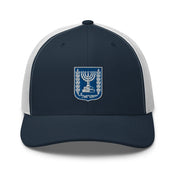
The menorah did not remain locked in the ancient world. When the modern State of Israel chose its official emblem in 1949, it placed a seven branched menorah at the center, framed by olive branches. That decision was deliberate. The emblem links the reborn Jewish state to Jewish sovereignty, Temple memory, and the refusal of the Jewish people to disappear.
A menorah in a Jewish home is therefore more than home decor. It is a visible statement of continuity. It says that Jewish life did not end when the Temple was destroyed or when Jews were scattered across continents. Israel returned, Hebrew returned, and the symbols of Jewish life returned to public honor.
Jewish Symbols Carry Identity Into Daily Life
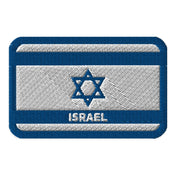
The Magen David, known in English as the Star of David, is now recognized across the world as a Jewish symbol. Its exact early origin is not fully known, and it was not introduced in the Torah as a ritual object. Yet over time it became closely tied to Jewish communities, synagogues, and Jewish identity. Today it appears on Israel’s flag and is worn with pride by Jews and supporters of Israel around the world.
The Magen David was forced onto Jews by the Nazis as a mark of humiliation. Jews reclaimed it as a sign of dignity, survival, and national renewal. To display it today is not merely an aesthetic choice. It is a clear answer to antisemitism: the Jewish people are here, they are not afraid, and Israel is not going anywhere.

The mezuzah is another of the most personal Jewish symbols. It is placed on the doorpost of a Jewish home and contains words from the Shema, the central declaration of Jewish faith. It turns an ordinary entrance into a daily reminder of God, family, and Jewish belonging. A mezuzah does not replace faith or guarantee protection. Its meaning comes from the biblical command and the person who chooses to live by it.
Then there is chai, the Hebrew word for life. Written with the Hebrew letters chet and yud, chai has a numerical value of eighteen. This is why gifts and charitable donations in multiples of eighteen are a familiar Jewish custom. After generations who tried to destroy Jewish life, the word carries special force. Am Yisrael Chai means the people of Israel live.
These symbols are different, but their message is connected. They are not lucky charms. They are reminders of covenant, memory, faith, survival, and responsibility.
Why Jewish Symbols Still Matter in a Time of Antisemitism
Jewish symbols have become more important, not less, at a time when Jewish people are targeted for wearing a kippah, speaking Hebrew, or standing with Israel. Hiding these signs may feel safer in some places, but Jewish history teaches a hard truth: hostility does not disappear when Jewish identity is hidden. Pride, knowledge, and solidarity are better answers.
The menorah, the mezuzah, the Hebrew letters of chai, and the Magen David belong to the people whose Scriptures shaped the biblical world. Honoring that heritage means rejecting replacement theology, rejecting antisemitism, and recognizing that the Jewish people have an unbroken connection to their land and their national home.
Choosing a meaningful Judaica item can be a simple way to act on that conviction. A Traditional Star of David Menorah can become a thoughtful gift or a visible reminder to pray for Israel. The point is not to collect symbols without understanding them. The point is to let them lead to respect, learning, and practical support for the Jewish state.
Jewish symbols carry Israel’s history in plain sight. They remember the Temple in Jerusalem, Jewish faith in the home, and a people who refused to abandon their identity. Learn what they mean. Display them with respect. And stand with Israel as the Jewish people continue to live, build, and defend their home.